Tree Trimming vs Pruning: What's the Difference?
Trimming and pruning aren't the same thing. Here's what each one does, when you need it, and what it costs in Oklahoma.
- Licensed, Insured & Bonded
- Crane for the Big Trees
- Clear Price Before We Start
- Free Quotes, No Pressure
- Yard Left Spotless
Get Your Free Quote
4.9150+ Google reviews
Tree Care Tips
In This Article
Homeowners use "trimming" and "pruning" like they're the same thing. They're not, and knowing the difference can save you money and protect your trees' health.
- Tree trimming: shaping the canopy
- Tree pruning: targeted health care
- Which one do you need?
- One rule: never top a tree
- Get a free assessment
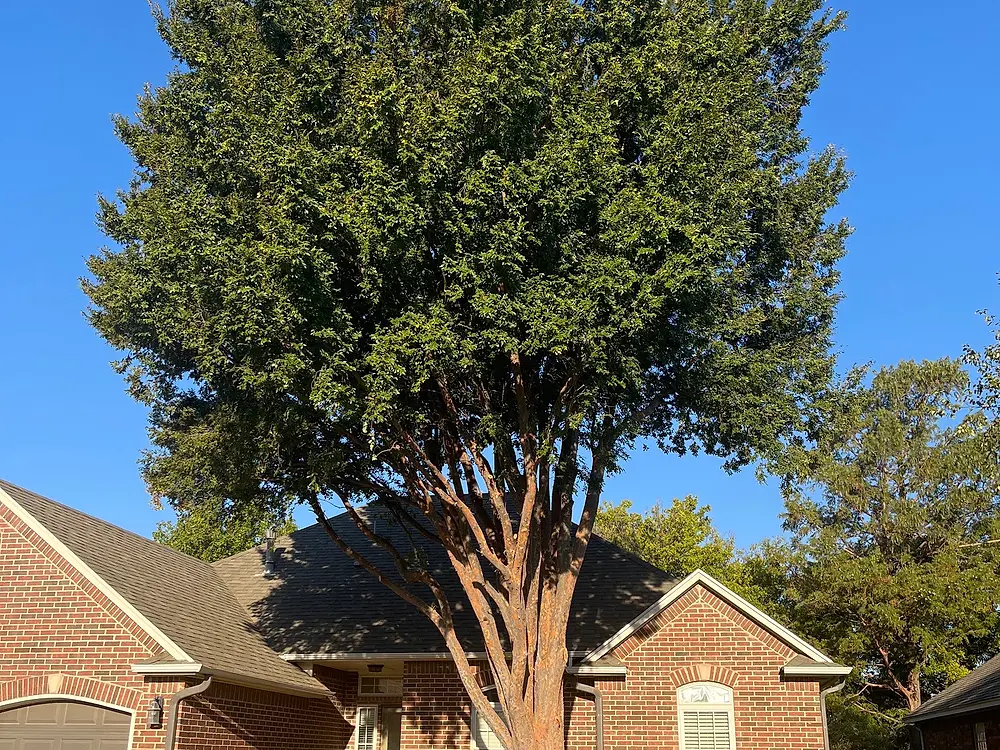
Tree trimming: shaping the canopy
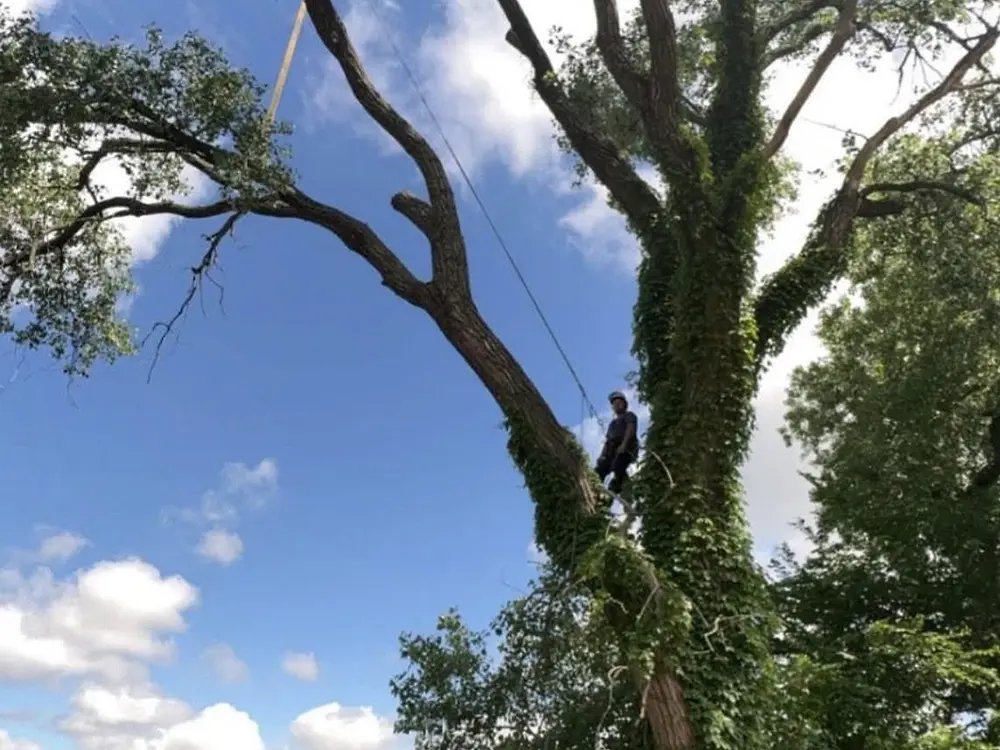
Trimming is the broader service. It's about managing the overall shape, size, and density of a tree's canopy. Think of it like a haircut, you're cutting back growth that's gotten too long, too thick, or too close to something.
Common reasons to trim:
When to trim: Most trees in Oklahoma benefit from trimming every 3 to 5 years. Fast-growing species (silver maple, cottonwood) may need it every 2 to 3 years.
Cost: $150 to $600 for most residential trees in the Edmond area, depending on size and access.
- Branches hanging over your roof, fence, or driveway
- Canopy is too dense and blocking light to your lawn
- Tree is growing into power lines or your neighbor's property
- Storm-prep: thinning to reduce wind resistance before severe weather
Tree pruning: targeted health care
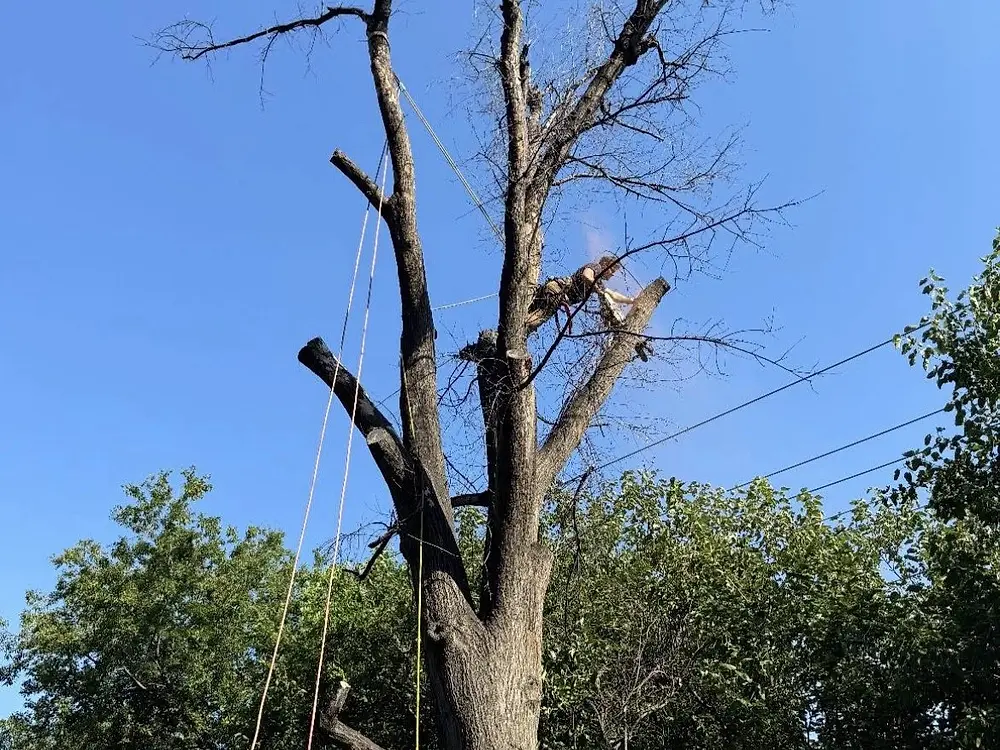
Pruning is more surgical. It's about making specific cuts to improve a tree's health, structure, and safety. Instead of shaping the whole canopy, you're targeting individual branches that are dead, diseased, crossing, or structurally weak.
Types of pruning:
When to prune: Late winter to early spring (before new growth) is ideal for most Oklahoma species. But dead/diseased branches should be removed as soon as you spot them, any time of year.
Cost: $150 to $800, depending on the scope. Detailed structural pruning on a large specimen tree costs more than basic deadwood removal.
- Crown cleaning: removing dead, dying, and diseased branches
- Structural pruning: training young trees to develop strong branch architecture
- Crown raising: removing lower limbs to increase clearance underneath
- Disease management: cutting out infected branches to stop the spread
Which one do you need?
Here's the simple test:
- Tree is too big, overgrown, or hanging over things? → Trimming
- Tree has dead branches, disease, or weak structure? → Pruning
- Not sure? → Ask for a free assessment. We'll walk your property, look at every tree, and tell you honestly what each one needs.
One rule: never top a tree
"Topping" means cutting all the main branches back to stubs. Some homeowners ask for it because they want a smaller tree. Don't do it. Topping stresses the tree, triggers weak regrowth, and creates more hazard long-term. Any reputable tree service will refuse to top a tree.
Get a free assessment
We do free on-site evaluations, we'll tell you exactly what your trees need (and what they don't). Call (405) 938-6735 or request an estimate online.
What we do
Every Tree Service, One Local Crew
How it works
How a Job Goes
- 1
Call or send the form
Tell us about your trees. Bradin gets back to you and sets up a time to look.
- 2
Get a clear quote
We look at the trees with you and give you a free estimate with a clear price. No pressure to book.
- 3
We do it and clean up
The crew shows up when we said, takes the trees down safely and hauls every limb away.
Got a Tree That Has Been Bugging You?
Call (405) 938-6735 or send the form and we will get back to you.